
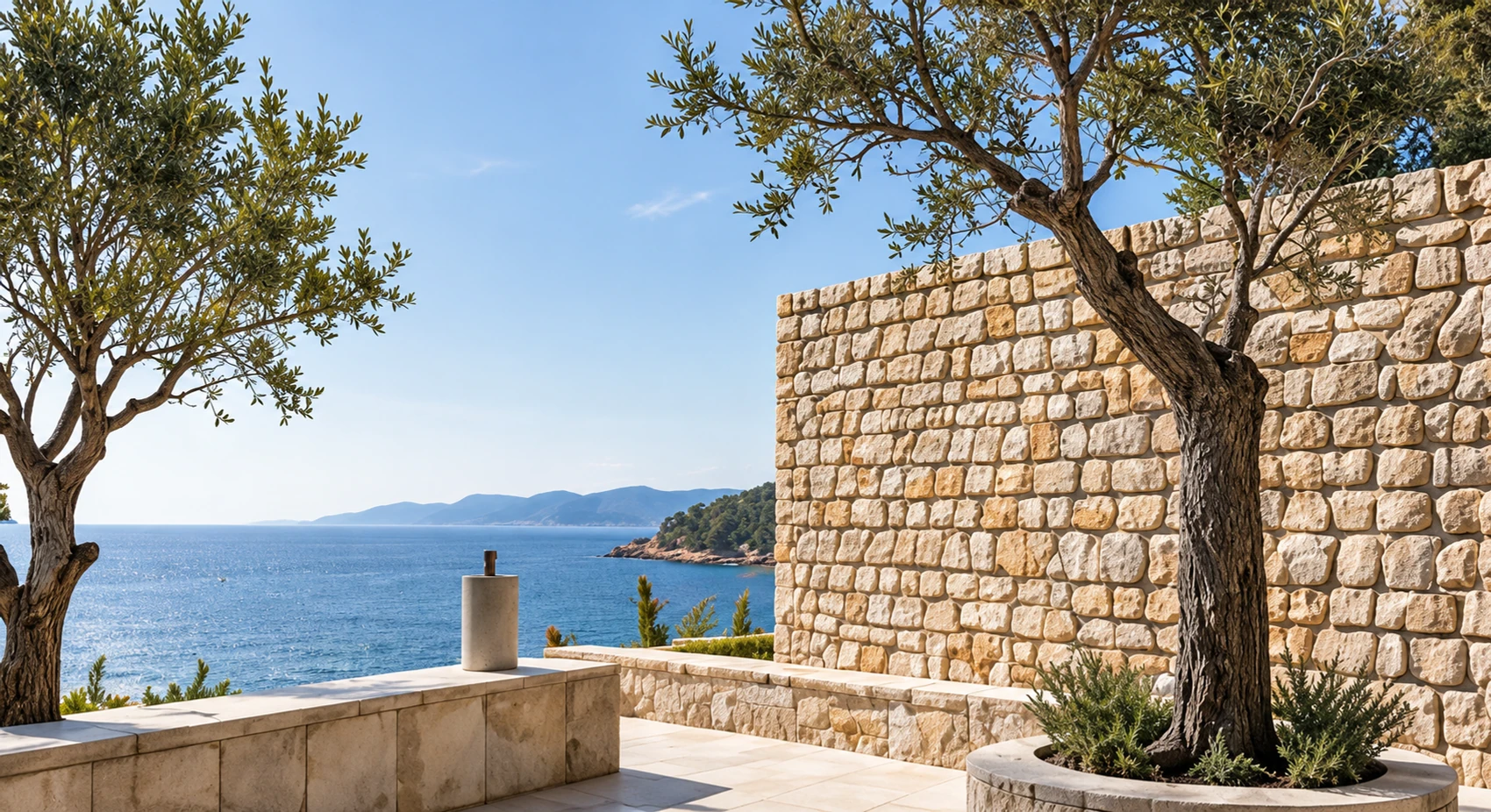
A stone building, an olive tree and a sequence of terraces can be read as parts of one landscape. The relationship between architecture and place extends beyond a panoramic view. It includes levels, paths, shadows and the transition from house to garden.
Observing the setting helps guide proportions and materials without reducing the design to imitation. Walls, steps and places to pause can follow the terrain. Planting introduces another scale and softens the meeting of building and surroundings.
A garden rooted in its setting requires choices informed by climate, exposure and available resources, developed with appropriate expertise. The design ambition is a lasting relationship: outdoor spaces to inhabit, understandable paths and architecture that leaves room for the landscape.